Luck vs Strategy in Board Games
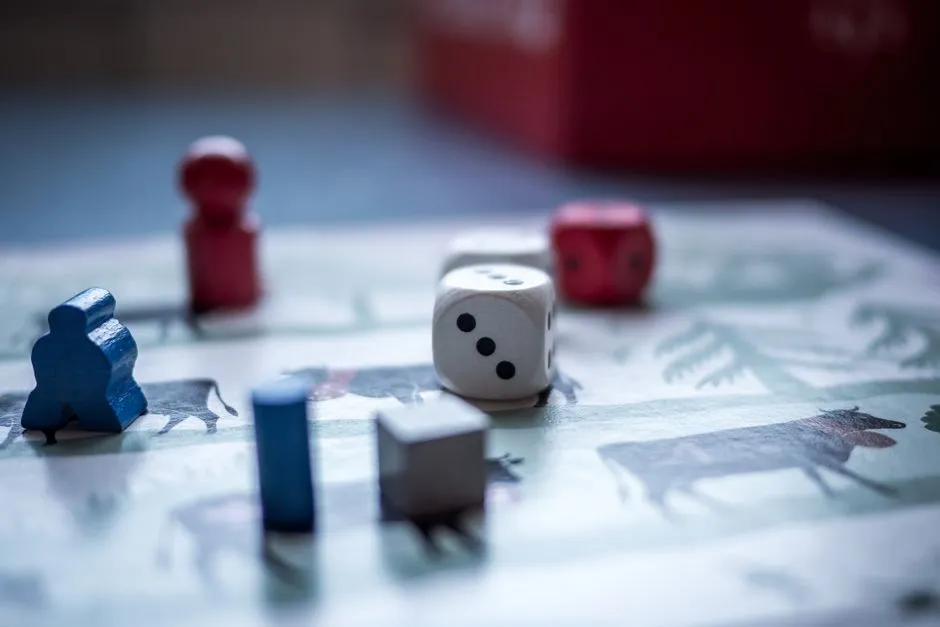
Is a Board Game About Luck or Strategy?
Most board games are not purely luck-based or purely strategic. They mix choices with uncertainty, then decide when players learn information and how much control they have after learning it. The useful question is not “Does this game have dice?” It is “What becomes uncertain, when does it become uncertain, and what can I do about it?”
That distinction turns a fuzzy argument into a practical way to choose a game. A group may enjoy adapting to a surprising draw, dislike having a careful move overturned by a roll, love reading concealed intentions, or want plans that develop over many turns. All four reactions can be reasonable. The cardboard is not holding a moral referendum.
Luck and Strategy Are Not Opposites
Luck describes an outcome affected by events players do not control. Strategy describes choices made toward longer-range goals. They can operate in the same turn: a player receives an uncertain situation, evaluates it, and makes a consequential choice.
Research on tabletop-game randomness makes the same broad point from another direction. A 2024 paper from Queen Mary University of London notes that random elements can affect outcomes in very different ways, and that simply counting random events does not measure how random a result will be. Player decisions may mitigate a poor result or exploit a favorable one. The interaction matters more than the mere presence of a die or shuffled deck.
Use four lenses when reading a game:
| Lens | What creates uncertainty? | What the player mainly does |
|---|---|---|
| Random input | A result appears before the choice | Adapt to what became available |
| Random outcome | A result appears after the choice | Judge risk before committing |
| Hidden information | Relevant facts are concealed | Infer, remember, bluff, or hedge |
| Long-range choice | Early decisions shape later options | Build and revise a plan |
A single design can use all four. The point of separating them is not to award a purity medal. It is to locate the moments your group will either find delicious or deeply annoying.
What Is Random Input?
Random input arrives before a player decides what to do with it. A shuffled set of tiles might reveal the options for a turn; a die might determine which actions are available; a variable setup might give each player a different starting problem. The surprise creates the position, then the player responds.
An IEEE study of input and output randomness uses a random card draw followed by a player decision as its input-randomness example. MIT OpenCourseWare similarly describes a design in which players see several randomly drawn tiles and choose one, preserving uncertainty while giving them room to adapt.
That sequence often feels like solving a fresh little puzzle:
- Something unexpected appears.
- The player can inspect it.
- The player chooses among known consequences.
“Often” matters. A terrible set of options can still feel punishing, and a nominal choice may be meaningless if one response is obviously correct. Random input creates an opportunity for adaptation; it does not guarantee an interesting decision.
Choose more of it when your table likes changing plans, discovering combinations, and comparing several imperfect options. Choose less when players want to calculate from a stable position without the available menu changing under them.
What Is a Random Outcome?
Random outcome arrives after a player commits. You choose an action, spend a resource, select a target, or take a risk; only then does a draw, roll, or other randomizer determine exactly what happens.
The same IEEE paper defines output randomness as the random element introduced after a decision. This structure changes the decision from “What should I do with these known options?” to “Is this uncertain attempt worth making?” That can put suspense directly on the resolution.
The fair comparison is not “thinking versus no thinking.” A meaningful random outcome may ask players to assess odds, preserve a fallback, decide how much to risk, or time an attempt. The strategy sits before the reveal. Still, a group that wants its chosen action to produce a predictable result may find this mechanism especially sharp.
Check what surrounds the random result:
- Can the player estimate the possible outcomes?
- Can they change the odds or limit the loss?
- Is failure a setback, or does it erase several turns of work?
- Does one reveal decide the game, or do many decisions still matter?
Two games can both use dice and give completely different answers. “It has dice” is therefore useful inventory information, but weak guidance about the experience.
Hidden Information Is Uncertainty, Not Necessarily Luck
A concealed hand, secret objective, facedown identity, or opponent’s private plan creates uncertainty without requiring a new random event at the moment of choice. MIT’s game-design lecture separates what everyone knows, what one player knows, and what the game system holds back. It also notes that an opponent’s deliberate choice may feel unpredictable without being random.
This distinction explains why some people say they dislike luck but happily play games full of secrets. They may dislike externally generated results while enjoying inference: tracking what has appeared, noticing what another player avoids, testing a story, or deciding whether a bluff is credible.
Hidden information can reward memory and observation, but it can also make exact calculation impossible. Ask what kind it is:
- Private resources: You know your own options but not everyone else’s.
- Secret intentions: Goals or planned actions are concealed.
- Unrevealed system information: A fixed but unseen order or result waits to be discovered.
- Simultaneous choices: Players decide privately, then reveal together.
Those forms create different table moods. Private resources invite inference. Secret intentions encourage misdirection. Simultaneous choices make prediction part of the turn. None can be summarized by a single “luck level.”
What Makes a Game Feel Strategic?
A game feels strategically rich when choices connect across time. An early decision changes later options; resources can be committed in more than one direction; opponents can interfere; and a player can revise a plan rather than merely follow it.
Look for consequences rather than complexity. A thick rulebook can produce busy turns with little long-range control. A short rule set can make one early placement matter for the entire session. Strategy is not measured in pages.
Four useful checks are:
- Planning horizon: How far ahead can a decision reasonably reach?
- Trade-offs: Does gaining one advantage require giving up another?
- Recovery: Can a player change direction after new information appears?
- Interaction: Must a plan account for opponents, shared resources, or a changing common board?
Perfect information does not make a game automatically welcoming, and randomness does not make one automatically shallow. MIT’s course frames information flow and uncertainty as variables to analyze, not a good-game/bad-game switch. That is the sensible way to shop, too.
How Do You Choose the Right Mix for Your Group?
Before choosing a title, ask the table about moments rather than labels. “Do you like strategy?” is nearly guaranteed to produce four versions of “it depends.” Better questions are concrete:
- Do you enjoy making the best of a surprising draw?
- Is it fun when a risky move succeeds on a final reveal?
- Do you like bluffing or tracking concealed information?
- Would you rather build one plan or revise it repeatedly?
- How much damage may one unlucky result cause before it stops being funny?
- Should a new player have a plausible route back into contention?
Then inspect the rules or publisher description for sequence. Find out what happens before a choice, what resolves after it, what remains hidden, and whether early choices accumulate. If the description only promises “endless strategy” or “wild luck,” it has given you adjectives instead of a map.
For a first modern tabletop choice, our guide to the best board games for beginners offers a broader starting point. Use the four lenses here to narrow that field according to your own table’s appetite for uncertainty.
A Quick Table Test
When comparing two unfamiliar games, summarize each in four sentences:
- “The game gives us random information before/after we choose.”
- “We can/cannot reduce the effect of a poor result.”
- “We do/do not need to infer concealed information.”
- “Our choices matter mainly now/across several turns.”
That description is more useful than assigning a percentage to luck. A number would imply a common measuring scale that boxes rarely provide and groups do not experience identically.
The best match is the game whose uncertainty creates decisions your table wants to make. Some groups want a solvable-looking puzzle that keeps wriggling. Some want a dramatic reveal. Some want to stare politely at a friend who is obviously bluffing. Strategy can live in all three rooms; it simply wears a different hat.