Cooperative Board Games Explained: How Co-op Play Works
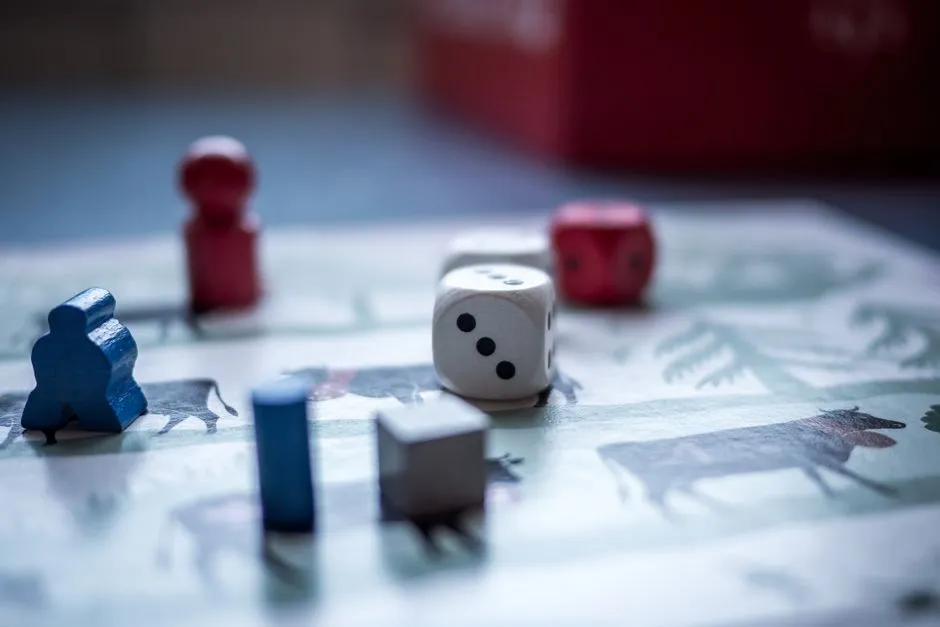
- Cooperative games put every player on the same side
- How a co-op board game creates an opponent
- The basic co-op turn
- Cooperative versus competitive games
- Common kinds of cooperative design
- The quarterbacking problem
- Why co-op games work for beginners
- Difficulty and adjustable challenge
- Choosing the right co-op for your table
- Teaching a cooperative game
- When a co-op is the wrong choice
- The shared-win rule that matters
Cooperative games put every player on the same side
In a cooperative board game, players work toward a shared objective and usually win or lose together. The opponent is the game system: a spreading threat, a ticking clock, a deck of bad news, or a puzzle that keeps developing while everyone argues about the least disastrous option.
Players may control separate characters, hands, or abilities, but their results are linked. If the group completes the objective before the loss condition arrives, everybody wins. If not, the box wins, which is impressive considering it has no hands and spent the evening lying flat.
How a co-op board game creates an opponent
Competitive games let other players generate resistance. A cooperative design needs procedures that push back without a human opponent. It usually combines several of these tools:
- An event deck: each round reveals a new problem, enemy, or restriction.
- Escalation: the same threat grows faster or stronger over time.
- Limited actions: the team cannot solve every problem before the next one appears.
- Resource pressure: health, cards, supplies, or time steadily run down.
- Automated movement: enemies follow priorities printed on cards or boards.
- A loss threshold: one track, location, or character reaching a limit can end the game.
The system should be predictable enough for planning but uncertain enough to create tension. If players can calculate every future event, the game becomes a group worksheet. If nothing can be anticipated, decisions feel decorative.
The basic co-op turn
Most cooperative turns follow a recognizable rhythm:
- A player spends actions, cards, or resources.
- Teammates may advise, assist, trade, or contribute.
- The game responds through an event, enemy phase, timer, or draw.
- The board changes and the group updates its plan.
That loop makes conversation part of play. The table is not merely waiting for one person to finish; everyone is watching the shared position and deciding what matters next.
Good co-ops still protect individual agency. A player should have a reason to control a particular character or hand rather than handing every decision to the person with the loudest flowchart.
Cooperative versus competitive games
| Question | Cooperative game | Competitive game |
|---|---|---|
| Main opposition | Automated game system | Other players, sometimes plus the system |
| Result | Shared win or loss | Individual or team ranking |
| Table talk | Usually planning and coordination | Often negotiation, reading rivals, or concealment |
| Information | May be open, limited, or hidden by rule | Often private hands or plans |
| Mistakes | Can affect the whole group | Usually hurt the player who makes them most |
| Conflict | About priorities and tactics | Built into victory conditions |
Neither format is friendlier by definition. Cooperative play removes the sting of attacking a friend, but it can replace it with a twenty-minute committee meeting about where one wooden cube should go. Competitive play can be warm and playful when the group enjoys rivalry.
Common kinds of cooperative design
Crisis management
Problems appear across a shared map or board faster than the team can solve all of them. Players specialize, travel, contain damage, and decide which fire can safely burn for one more round. The pleasure comes from turning chaos into priorities.
Campaign and adventure
Characters move through linked scenarios, gain abilities, and carry consequences forward. These games reward a regular group and a reliable place to store progress. They are less suited to a casual table whose cast changes every week.
Cooperative deduction
Players combine partial clues to identify a person, word, place, pattern, or solution. Communication restrictions often matter more than movement on a board. These can work beautifully with new players because the rules stay compact while the conversation does the heavy lifting.
Real-time coordination
A timer forces players to act or communicate quickly. Real-time play creates energy and magnificent nonsense, but it can be stressful for anyone who prefers careful turns. Confirm that the whole group wants the timer before setting it loose.
Limited-communication co-op
Players share a goal but cannot reveal every card or say every detail. The restriction prevents perfect planning and gives each player ownership of private information. It also turns “I was trying to help” into a surprisingly suspenseful sentence.
One-versus-many and hidden-traitor games
These are related, but not fully cooperative. In one-versus-many play, one human openly controls the opposition. In a hidden-traitor game, most players share a goal while one may secretly undermine it. Both add social suspicion that a pure co-op deliberately removes.
The quarterbacking problem
Quarterbacking happens when one experienced or forceful player makes decisions for everyone. Because information is often shared, that person can see a theoretically efficient move and begin issuing instructions. Soon the “cooperative” game has one player and several decorative mammals holding cards.
The problem is social, but design can either encourage or resist it. Private information, simultaneous decisions, distinct roles, communication limits, and time pressure make complete control harder.
At the table, use simple fixes:
- let the active player speak first about their turn;
- offer two options instead of a command;
- ask quieter players what they see;
- keep each player's cards in their own hands;
- accept an imperfect move that belongs to its maker;
- rotate who explains the group's current plan.
Winning is not worth converting somebody else's evening into unpaid observation.
Why co-op games work for beginners
New players can ask questions without revealing strategy to an opponent. Experienced teammates can model the turn structure, and the group shares the emotional landing of a loss. That often makes co-op play an easy entrance to modern games.
The catch is quarterbacking. A beginner who merely follows instructions learns less than one who makes a choice, sees the result, and adjusts. Choose a game with clear individual roles and let new players own their turns.
Our beginner game guide explains the broader criteria that matter: teach time, forgiving mistakes, player-count fit, and whether a game remains interesting once everyone knows what they are doing.
Difficulty and adjustable challenge
Many cooperative games offer difficulty settings, extra threats, or scenario levels because the group improves with familiarity. The first session teaches not only the rules but also the rhythm of the system. Later, players coordinate earlier and waste fewer actions.
Begin at the recommended introductory setting. Increasing difficulty before the group understands why it lost produces more frustration, not more honour. Once the team wins consistently, add one challenge at a time so you can tell what changed.
A good loss should reveal a decision the group wants to reconsider. A bad loss feels arbitrary or arrives before anyone understands the available tools.
Choosing the right co-op for your table
Check five things:
- Player count: some designs become crowded at their maximum or lose interesting role combinations at two.
- Session length: allow extra time for the first teach and discussion.
- Communication style: open planning, restricted clues, and timed shouting create very different nights.
- Continuity: a campaign needs returning players; a single-session game welcomes a changing group.
- Failure tolerance: decide whether the group enjoys a hard puzzle or wants a generous first win.
For a home event, place a co-op in the main slot rather than using it as background while people arrive. Our game-night hosting guide shows how to build an opener, main event, and closer without presenting six boxes and accidentally scheduling a committee summit.
Teaching a cooperative game
Explain the shared objective and every loss condition first. Players need to know what the team is protecting before learning how a turn works. Then cover the action structure, the game-response phase, and one sample decision.
Do not teach the optimal strategy. Discovery is part of the game, and a scripted solution leaves little reason to play. Mention irreversible traps only when the rules make them genuinely opaque.
During the first round, narrate the system's response clearly. Players should understand why a threat moved or a track advanced. Once the rhythm is visible, the table can focus on decisions instead of administration.
When a co-op is the wrong choice
Skip cooperative play when the group wants direct competition, dislikes open discussion, or includes someone who cannot resist controlling every turn. A team game or short competitive game may produce a healthier table.
Also skip a tense real-time co-op if players came to unwind slowly. “We are all on the same side” is not comforting when the soundtrack is a countdown and somebody has forgotten which way the spaceship points.
The shared-win rule that matters
The best cooperative games make collaboration necessary without erasing individuals. Each player contributes information, powers, or judgment the table would miss. The game pushes hard enough to demand coordination, then lets the group recognize where its plan succeeded or cracked.
Protect that agency. Ask, suggest, listen, and let people make their own moves. Winning together is satisfying; losing together can be hilarious. Watching one self-appointed commander beat a cardboard outbreak while everyone else passes snacks is neither. Explore more structures in Tabletop Basics.