How to Host a Game Night: Planning, Games, Food, and Flow
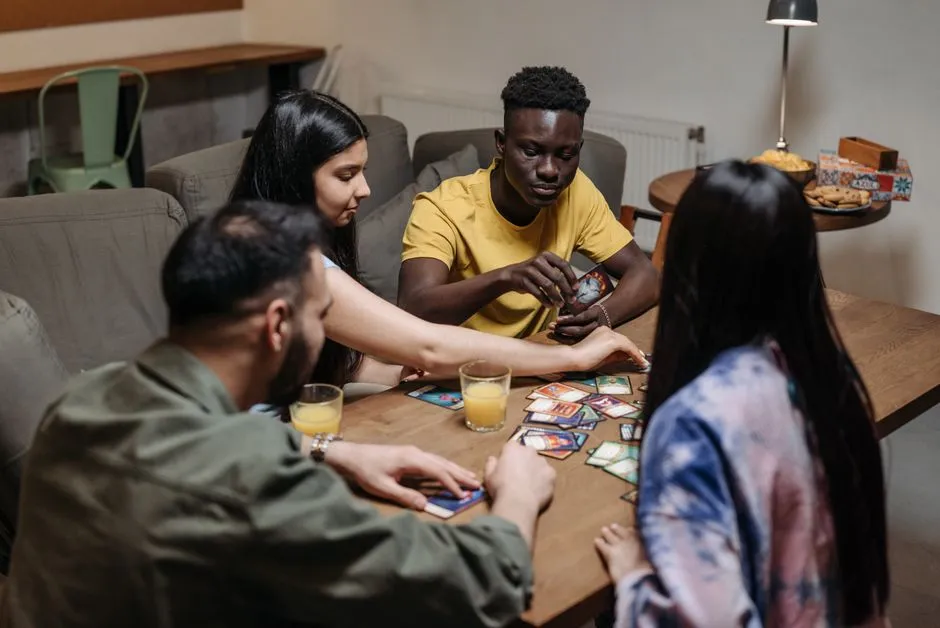
How to Host a Game Night That People Want to Come Back To
Hosting a game night comes down to five decisions made before anyone arrives: who is coming (aim for four to six players), which games you will play (plan three, expect to play two), what people will eat (dry, one-handed food away from the table), where everyone will sit (clear the table completely), and how the evening will flow (open with something light, put your main game in the middle, and end with something silly). Get those five right and the night mostly runs itself.
Everything below walks through each decision in order, with the reasoning behind it, so you can adapt the plan to your own group instead of following someone else's script.
Step 1: Decide Who's Coming — and How Many
Group size shapes every other choice you make, so settle it first.
Four to six players is the sweet spot for most home game nights. It is large enough to feel like an event and small enough that one copy of one game can hold everyone. Most popular hobby board games support up to four or five players; far fewer play well at seven or eight.
A few guidelines by group size:
- 3–4 players: The easiest night to host. Nearly every game works, teaching is fast, and downtime between turns stays short.
- 5–6 players: Still one table, but check player counts on the box before you commit. Party-style and team games start to shine here.
- 7 or more: Plan to split into two tables, or lean on games specifically built for big groups. One eight-player game of anything with individual turns means long waits and drifting attention.
Mix experience levels deliberately. If half your guests have never touched a modern board game, that is fine — it just means your lineup should favor games that teach in under ten minutes. Our roundup of the best board games for beginners is built exactly for this situation, with picks judged on teach time and how forgiving they are of early mistakes.
Finally, set a real start time and mean it. "Come around 7" reliably produces someone arriving at 8:15. Instead, try "doors at 7, first game at 7:30." That half-hour buffer absorbs late arrivals, gives people time to get a drink and say hello, and lets you start the first game without anyone feeling ambushed.
Step 2: Pick the Games (Plan Three, Play Two)
The most common question new hosts ask is how many games to prepare. The honest answer: plan a lineup of three games, and expect to actually play two of them. A typical three-to-four-hour game night has room for one substantial game plus one or two shorter ones — and having a third option ready means you are never stuck when a game runs long or lands flat.
The three-slot lineup
Think of your lineup as three slots with different jobs:
| Slot | Job | Length | When to play it |
|---|---|---|---|
| Opener | Warm people up while stragglers arrive | 15–30 min | First, and it should survive players joining mid-game |
| Main event | The centerpiece — deepest game of the night | 45–90 min | Middle of the evening, once everyone is present and fed |
| Closer | End on laughter, not exhaustion | 15–30 min | Last, when brains are tired but nobody wants to leave |
The opener should be something you can teach in five minutes and pause without ruining — card games, dexterity games, and quick party games all work. The main event is where a meatier strategy game belongs, and it deserves your best teaching effort. The closer should be loud, light, and low-stakes; ending the night on a two-hour brain-burner sends people home drained instead of happy.
Rules for choosing the lineup
- Match the game to the group, not to your own taste. The game you are dying to play is only the right pick if your guests will enjoy learning it.
- Check the player count on the box — then be skeptical of the top end. Many games technically seat six but drag badly there. If you are unsure, assume a game plays best at one or two below its maximum.
- Learn the rules before the night, not during it. Reading a rulebook aloud to a waiting table is the single fastest way to kill momentum. Skim the rules in advance, set the game up once by yourself if it is new, and teach from memory with the book nearby for disputes.
- Teach by starting. Explain the goal, the turn structure, and one example turn — then start playing and answer questions as they come up. People learn games by playing them, not by listening to a lecture.
If you want inspiration for how professionals handle this, board game cafes are a masterclass in matching games to groups: staff routinely size up a table of strangers and hand them something they will actually finish. Our guide to how board game cafes work covers that culture in detail, and an evening at one is a great low-effort alternative when hosting at home is not in the cards.
Step 3: Plan Food That Won't Ruin the Games
Game night food has one non-negotiable rule: nothing greasy, sticky, or drippy near the components. Orange dust on white cards is forever.
The reliable approach:
- Serve dry, one-handed foods. Pretzels, popcorn, cut vegetables, cheese cubes with toothpicks, and sandwiches or wraps in halves all let people eat without leaving residue on everything they touch.
- Put food on a separate surface. A side table or kitchen counter keeps plates, crumbs, and condensation away from the play area. People graze between turns instead of hovering over the board.
- Use cans, bottles, or lidded cups instead of open glasses. One knocked-over open drink can end a game — and if it is someone's expensive collector's copy, it can end a friendship's good mood too.
- If you are doing a real meal, do it before the main event. Pizza between the opener and the centerpiece game works beautifully: it creates a natural social break and means nobody is dealing cards with slice hands.
- Ask about dietary restrictions when you invite people, not when they arrive. One vegetarian option and one gluten-free-friendly snack cover most groups without turning hosting into catering.
Making it a potluck lightens your load and gives guests a stake in the evening — just assign categories ("you bring drinks, you bring a snack") so you do not end up with five bags of chips.
Step 4: Set Up the Space
You do not need a dedicated game room. You need a cleared table, decent light, and seats for everyone.
- Clear the table completely. Centerpieces, mail piles, and laptops all fight the game for space. A standard dining table comfortably handles most games for four to six players.
- Light the table, not the room. Dim mood lighting is lovely for conversation and terrible for reading cards. Overhead light or a bright lamp aimed at the table matters more than ambiance.
- Give every seat a real chair. The person perched on a barstool at the table's corner has a worse night than everyone else, every time.
- Keep music instrumental and quiet, if you play it at all. Lyrics compete with rules explanations. Background-level volume is the ceiling.
- Stage the games in arm's reach. Have your three-game lineup stacked and visible. Transitions between games are where energy dies; being able to say "next up is this one" while the last game is being boxed keeps things moving.
Step 5: Run the Flow
Hosting during the night is mostly gentle traffic control:
- Doors open, drinks poured, opener on the table. Start the opener with whoever is present at your stated start time. Latecomers can join the next round or watch a few minutes.
- Food break, then the main event. Eat, reset the table, then teach and play your centerpiece game while the group's energy is at its peak.
- Read the room before the closer. If people are chatty and energized, play the closer. If it is late and someone is yawning, a graceful goodbye beats a forced final game.
- End on time. A stated end time ("we usually wrap by 11") gives guests permission to leave without awkwardness and makes the invitation easier to accept next time.
Two hosting habits matter more than any of the mechanics above. First, the host plays to have fun, not to win — nothing sours a table faster than a host grinding out a victory over first-time players. Second, protect the quiet players. If one voice is dominating every decision in a cooperative game, redirect gently: "What do you think we should do here?" aimed at the quietest seat fixes it without confrontation.
Common Mistakes to Skip
- Too many games, too little playing. A lineup of six options usually means thirty minutes of debating instead of playing. Three is plenty.
- Starting with the heaviest game. Save it for slot two, after warm-up and food.
- Teaching a game you have never played. If it is new to you, learn it solo first or pick something you know.
- Treating game night as a one-off. The groups that thrive make it recurring — same night each month, rotating hosts. Regularity does more for attendance than any individual game pick.
Host it once, keep what worked, and adjust the rest. By the third game night you will have a formula your group looks forward to — and if you want to deepen the well of games you can draw from, our Tabletop Basics guides are a good next stop.